
Master these to truly understand servers
Server performance and stability rely heavily on hardware configurations. Different from consumer PCs, server hardware features exclusive designs, specifications and functions that directly determine operating efficiency. Below is an in-depth breakdown of core server hardware components.
- CPU Known as the server brain, it processes client requests, executes calculations and allocates system resources. Server CPUs prioritize multi-core and multi-thread performance for massive parallel tasks instead of high main frequency. Main models include Intel Xeon and AMD EPYC, with abundant cores and hyper-threading support. They also feature fault tolerance and virtualization capabilities to support 7×24-hour continuous operation.
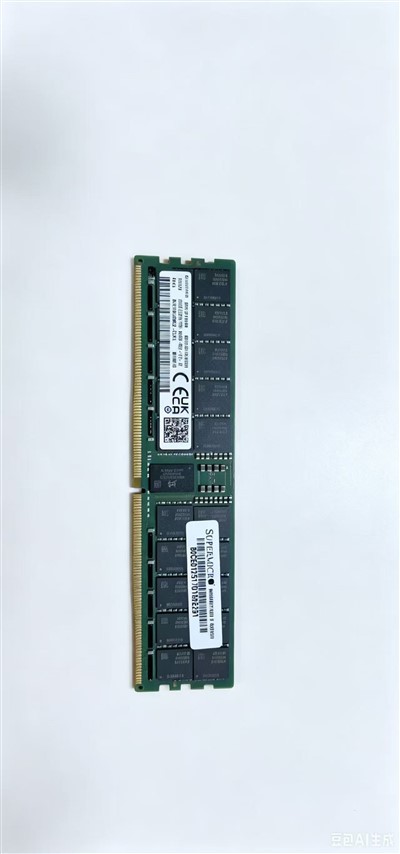
- RAM Serving as temporary data storage for running programs, server memory boasts much larger capacity starting from 16GB/32GB up to several TB to avoid system lag or crash under heavy loads. Most servers adopt ECC memory, which automatically detects and fixes data errors to enhance data security and operational stability, a function unavailable in ordinary PC memory.
- Hard Drive Permanent storage for system files, applications and user data. Servers use two main types: high-capacity low-cost HDD for cold data backup, and high-speed low-latency SSD for frequently-accessed databases and core programs. Servers commonly apply RAID technology to combine multiple drives, realizing data backup and faster read-write speed to prevent data loss from single disk failure.
- Motherboard The framework connecting all hardware parts for signal transmission and coordinated operation. Server motherboards own stronger expandability with multi-CPU slots, abundant memory and disk interfaces, plus optimized heat dissipation and stability design for long-term high-load work.
- Power Supply Core power provider for all hardware. Servers adopt redundant power design such as 1+1 and 2+1 modes. Faulty single power supply will be instantly replaced by others to ensure non-stop operation. High-efficiency design also cuts power consumption and operating costs.
- Network Card Key network gateway for data interaction between servers and clients. Server network cards support Gigabit and 10-Gigabit Ethernet, and high-end models adopt fiber ports for faster and steadier data transmission. Link aggregation technology is also supported to combine multiple network cards for wider bandwidth and network fault prevention.