
As the core hardware support for enterprise business operations, servers directly determine office efficiency, business stability and data security.
Improper selection may lead to waste of hardware configuration, increase operation and maintenance costs, and may also cause business bottlenecks due to insufficient performance, affecting the normal operation of the enterprise.
Based on the characteristics of enterprise IT demands in 2026, this article, from three dimensions of model adaptation, parameter matching and cost performance control, provides a scientific selection guide for enterprises of different scales.
Precisely match the model according to the enterprise scale
- The number of personnel, business scenarios and server conditions vary significantly among enterprises of different scales. Therefore, it is necessary to select server types specifically to achieve a precise match between performance and requirements.
- For small and micro enterprises, tower servers are the preferred choice. These models, as entry-level products, have the advantages of small size, low space consumption, and flexible deployment. They do not require a professional data center environment. They can be placed in a desktop-level space and can easily support the daily office systems, simple financial software, and small file sharing needs of a 10-20 person team. They offer outstanding cost performance and low maintenance difficulty.
- For medium-sized enterprises, rack-mounted servers are recommended. This model is a mid-range mainstream product, featuring a standardized rack design with higher density. It can be uniformly managed within the server room cabinets, facilitating centralized power supply, cooling, and operation and maintenance control. It can perfectly adapt to business systems for teams of 50 to 200 people, covering various scenarios such as medium-sized databases, OA collaboration platforms, and online business portals, while balancing stability and manageability.
- Large enterprises and group organizations can choose blade servers. As a high-end modular product, its core advantage lies in its elastic expansion capability. Through a unified backplane and management module, it can flexibly add or remove computing nodes and storage nodes, easily meeting the heavy-load requirements of ERP systems, large databases, AI computing power support, high-frequency concurrent business, etc., for hundreds of people to access simultaneously, and adapting to the large-scale development and business iteration upgrade of enterprises.
Focus on core parameters and align with business scenario requirements
- The core of server selection lies in the precise matching of parameters and business scenarios. Based on the type of business, key parameters should be prioritized for selection to avoid blindly pursuing full high-end configurations.
- For computationally-intensive applications, such as AI training, big data analysis, and high-performance computing, the key factors to focus on are the number of CPU cores, clock speed, and cache capacity. It is recommended to use servers equipped with high-performance processors from Intel Xeon series or AMD Ryzen series to ensure computing speed and multi-tasking capabilities, and to meet the requirements of high-load computing.
- For storage-intensive businesses, such as file sharing, video surveillance storage, data backup centers, etc., the key factors to consider are the number of hard drive slots, the type of storage interface, and the expansion capability. It is preferable to choose models that support 8 or more slots. According to the requirements, mechanical hard drives (HDD) can be used for large-capacity storage, while solid-state drives (SSD) can be used for high-speed reading and writing. At the same time, pay attention to whether it supports RAID arrays to ensure data security.
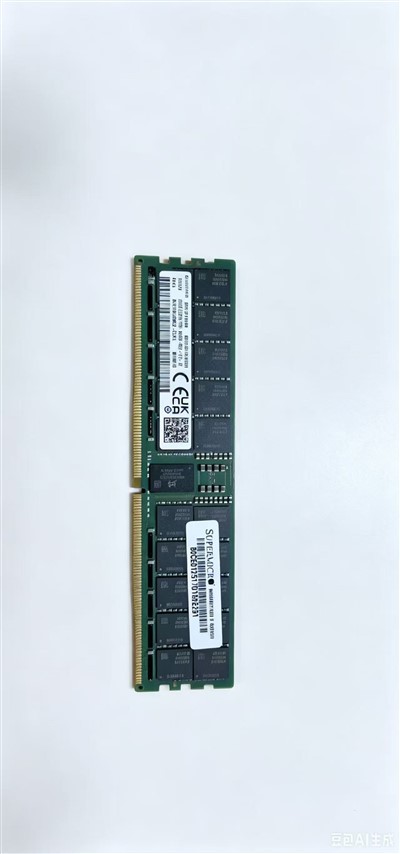
- Furthermore, the memory expansion capability should not be overlooked. Regardless of the specific business scenario, at least 2 memory expansion slots must be reserved to provide upgrade space for future business expansion and load increase, and to prevent the overall performance of the system from being limited due to insufficient memory.
Avoiding cost pitfalls in terms of performance, scientifically controlling the selection cost
- Server selection is not about choosing the one with the highest configuration. One needs to strike a balance between performance, requirements and budget to avoid unnecessary cost expenditures.
- Avoid blindly chasing high-end configurations and prevent resource waste. For instance, a 10-person small team may choose a 4-core CPU server, which has computing power far exceeding the needs of daily office work and simple business operations. Not only is the initial purchase cost relatively high, but it will also increase subsequent electricity costs and maintenance costs, resulting in idle resources.
- Before making a selection, it is necessary to accurately calculate the daily load. Based on indicators such as the average daily business traffic, data increment, and peak load, select the corresponding product level. If the budget is limited, a combination solution of "basic server + later upgrade of RAM/SSD" can be adopted. This solution can not only meet the current business needs, control the initial procurement cost, but also adapt to business development through subsequent upgrades, achieving the maximum cost-effectiveness.