

Hey there, tech enthusiasts! I'm a supplier for Lenovo Switch products, and today I want to dig into a question that a lot of you have been asking: Does Lenovo Switch have a fan for cooling?

Let's start by understanding why cooling is such a big deal in network switches. Network switches are like the traffic cops of the digital world. They direct data packets from one device to another, and this process generates heat. If the heat isn't managed properly, it can lead to performance issues, shorter lifespan, and even hardware failures. That's where cooling systems come in.
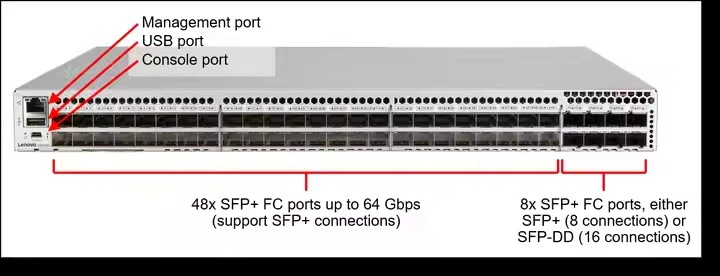
Lenovo offers a wide range of switches, each designed for different use - cases and environments. Some of the popular models include the Lenovo DB720, Lenovo DB610S, and Lenovo DB620S.
Not all Lenovo switches have fans. It depends on the model and its intended application. For smaller, less - demanding switches, Lenovo often uses passive cooling methods. Passive cooling relies on heat sinks and natural convection to dissipate heat. Heat sinks are made of materials with high thermal conductivity, like aluminum. They absorb the heat generated by the switch's components and transfer it to the surrounding air.
These passively - cooled switches are great for home networks, small offices, or environments where noise is a concern. Since there are no fans, they operate silently. This is a huge advantage in settings like a quiet office or a home theater where the last thing you want is the constant whirring of a fan.
On the other hand, larger and more powerful Lenovo switches usually come with fans. These switches are designed for enterprise - level networks, data centers, or high - traffic environments. They handle a large volume of data traffic, which means they generate a significant amount of heat. Fans are essential in these cases to ensure efficient cooling.
The fans in Lenovo switches are carefully engineered. They are designed to move a sufficient amount of air across the switch's components to keep them at an optimal temperature. Lenovo also takes into account factors like fan noise. The fans are built to operate quietly while still providing effective cooling.
Let's take a closer look at some of the models. The Lenovo DB720 is a high - end switch typically used in data centers. Given its high - performance capabilities, it's equipped with a fan - based cooling system. The fans in the DB720 are designed to work in tandem with heat sinks to provide a comprehensive cooling solution. This ensures that the switch can handle heavy workloads without overheating.
The Lenovo DB610S and Lenovo DB620S are more mid - range switches. The cooling requirements for these models vary depending on the configuration. Some versions may use passive cooling, while others may have fans. It really depends on the specific features and the expected traffic load.
If you're in the market for a Lenovo switch, it's important to consider your cooling needs. If you're setting up a small network at home or in a small office, a passively - cooled switch might be the best option. You'll get a quiet and reliable device without the need for active cooling.
However, if you're an enterprise or a data center manager, you'll likely need a switch with a fan - based cooling system. These switches can handle the high traffic and heavy workloads that come with large - scale networks.
Another thing to keep in mind is the maintenance of the cooling system. For switches with fans, regular maintenance is crucial. Dust and debris can accumulate on the fans and heat sinks over time, reducing their efficiency. You should clean the fans and heat sinks periodically to ensure optimal performance.
As a supplier, I've seen firsthand how important it is to choose the right switch for your needs. Lenovo offers a great range of products, but understanding the cooling requirements is key. Whether you need a silent switch for your home or a high - performance switch for your data center, Lenovo has you covered.
If you're interested in learning more about Lenovo switches or have any questions about their cooling systems, I'm here to help. I can provide you with detailed information about each model, including its cooling features. And if you're ready to make a purchase, we can start the procurement process. Just reach out, and we can have a chat about your specific requirements.
In conclusion, Lenovo switches come with different cooling solutions depending on the model. Some use passive cooling, while others have fan - based systems. By understanding your needs and the features of each switch, you can make an informed decision. So, don't hesitate to get in touch if you want to explore the world of Lenovo switches and find the perfect fit for your network.
References
Lenovo official product documentation
Industry reports on network switch technology