

Hey there! As an HPE workstation supplier, I often get asked, "How long does it take to boot up an HPE workstation?" Well, it's not a one - size - fits - all answer, and there are a bunch of factors that come into play. Let's dig into this topic and find out what affects the boot - up time of these powerful machines.
Factors Affecting Boot - Up Time
Hardware Components
First off, the hardware inside the HPE workstation has a huge impact on boot - up time. The type of storage device is a major factor. If a workstation is using a traditional Hard Disk Drive (HDD), it's going to take longer to boot compared to one with a Solid - State Drive (SSD). HDDs work by spinning a magnetic disk to read and write data, which is a relatively slow process. On the other hand, SSDs use flash memory, which allows for much faster data access.
For example, the Workstation Z4 G4 can be configured with either an HDD or an SSD. When equipped with an HDD, you might be looking at a boot - up time of around 45 seconds to a minute. But if you opt for an SSD, that time can be cut down to as little as 10 - 15 seconds. That's a massive difference!
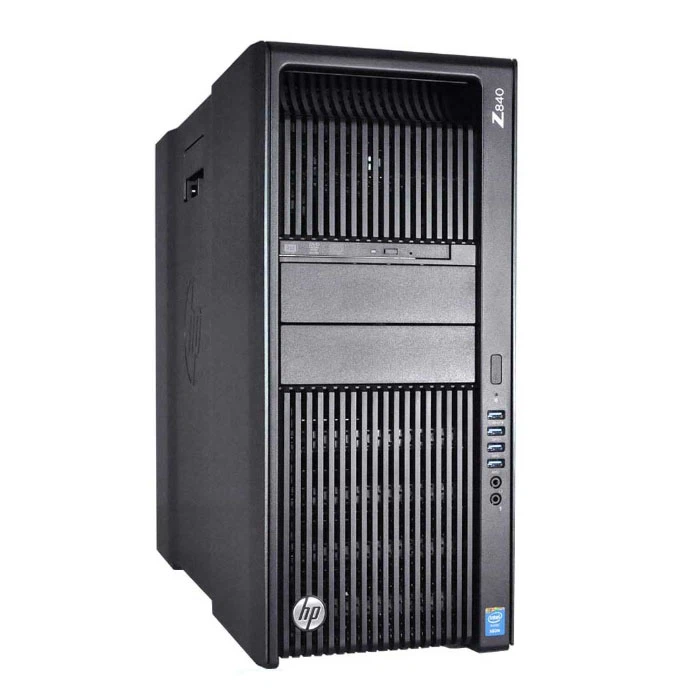

The amount of Random Access Memory (RAM) also matters. If a workstation has insufficient RAM, the operating system may have to swap data between the storage device and the limited memory space, which slows down the boot - up process. A workstation with at least 8GB of RAM is generally a good starting point for a smooth boot - up. Higher - end workstations like the Z 840 often come with 16GB, 32GB, or even more, which helps in quicker boot - up as the system can load more data into memory at once.
The processor is another crucial component. A faster processor can handle the tasks involved in boot - up, like loading the operating system files and initializing hardware drivers, more quickly. HPE workstations are available with a range of processors, from mid - range ones to high - performance CPUs. A workstation with a top - of - the - line processor will typically boot up faster than one with a slower model.
Software Configuration
The software on the workstation also plays a role. If the operating system has a lot of startup programs enabled, each one will take some time to load during boot - up. You can disable unnecessary startup programs through the system settings to speed things up. For example, some background utilities or software that you don't use right away can be set to start manually instead of automatically.
The version and state of the operating system matter too. A fully updated operating system often has optimizations that can improve boot - up time. Additionally, if the system has a lot of junk files or fragmented data, it can slow down the boot process. Regularly running disk cleanup and defragmentation tools (for HDDs) can help keep the system running smoothly.
BIOS/UEFI Settings
The Basic Input/Output System (BIOS) or Unified Extensible Firmware Interface (UEFI) settings can impact boot - up time. Some settings, like the boot order, can be adjusted. If the workstation is set to look for a bootable device in multiple locations (such as USB drives, network boot options) before trying the primary hard drive, it can add extra time to the boot process. You can change the boot order to prioritize the main storage device and eliminate unnecessary boot attempts.
Boot - Up Times for Different HPE Workstations
Workstation Z4 G4
The Workstation Z4 G4 is a popular mid - range HPE workstation. When configured with a standard 1TB HDD, Windows 10, 8GB of RAM, and a mid - range Intel Xeon processor, it usually takes about 40 - 50 seconds to boot up. However, if you upgrade to a 512GB SSD, 16GB of RAM, and a more powerful processor, the boot - up time can be reduced to around 12 - 18 seconds. This makes a significant difference, especially if you need to get to work quickly.
Z 840
The Z 840 is a high - end HPE workstation designed for heavy - duty tasks. With a default configuration of a 2TB HDD, 32GB of RAM, and a high - performance Intel Xeon processor, it boots up in about 50 - 60 seconds. But when you switch to a 1TB SSD, the boot - up time drops to approximately 15 - 20 seconds. This is great for professionals who rely on their workstations for tasks like 3D modeling, video editing, and data analysis, where every second counts.
HP Z1 G9 Workstation
The HP Z1 G9 Workstation is a compact yet powerful all - in - one workstation. With a 256GB SSD, 16GB of RAM, and an Intel Core i7 processor, it can boot up in as little as 10 - 12 seconds. This lightning - fast boot - up time is perfect for users who are always on the go and need their workstation to be ready in an instant.
Tips to Reduce Boot - Up Time
If you already own an HPE workstation and want to reduce its boot - up time, here are some tips:
- Upgrade your storage: As mentioned earlier, swapping an HDD for an SSD can make a huge difference.
- Manage startup programs: Disable any programs that you don't need to start automatically.
- Keep your system updated: Both the operating system and the BIOS/UEFI should be regularly updated.
- Increase RAM: If your workstation has insufficient RAM, adding more can improve boot - up speed.
In conclusion, the boot - up time of an HPE workstation can vary greatly depending on hardware, software, and settings. By choosing the right components and keeping your system optimized, you can significantly reduce boot - up time. Whether you're a professional in need of a quick - starting workstation for your daily tasks or a business looking to upgrade your fleet of computers, HPE workstations offer a range of options to meet your needs.
If you're interested in purchasing an HPE workstation or have any questions about boot - up times, components, or configurations, feel free to reach out. We're here to help you make the best choice for your needs and get you up and running as quickly as possible.
References
- HPE official product documentation
- Internal testing data from our company
- Windows operating system optimization guides