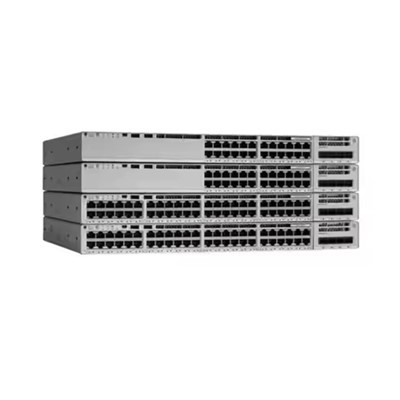


As a trusted Cisco switch supplier, I am often asked about the various load - balancing methods available on Cisco switches. Load balancing is a crucial aspect of network management, as it helps distribute network traffic evenly across multiple paths, ensuring optimal performance, high availability, and efficient resource utilization. In this blog, I will explore the different load - balancing methods that can be implemented on Cisco switches.
1. Source MAC Address - Based Load Balancing
One of the most basic load - balancing methods on Cisco switches is source MAC address - based load balancing. In this method, the switch uses the source MAC address of the incoming frames to determine the path through which the traffic will be forwarded.
When a frame arrives at the switch, the switch examines the source MAC address. Based on a pre - defined algorithm, it selects an appropriate output port from a group of available ports. For example, if there are multiple links between the switch and another network device, the switch will use the source MAC address to decide which link to use for forwarding the frame.
The advantage of source MAC address - based load balancing is its simplicity. It is easy to configure and does not require complex calculations. However, it may not always provide the most efficient load distribution. If a large number of frames come from the same source MAC address, they will all be sent through the same path, potentially causing congestion on that path.
2. Destination MAC Address - Based Load Balancing
Similar to source MAC address - based load balancing, destination MAC address - based load balancing uses the destination MAC address of the incoming frames to determine the forwarding path.

When a frame is received, the switch looks at the destination MAC address and selects an output port based on a specific algorithm. This method can be useful in scenarios where traffic is concentrated towards a particular destination. For instance, in a data center environment where multiple servers are connected to a switch, if most of the traffic is destined for a specific server, the switch can distribute the traffic evenly across multiple links using destination MAC address - based load balancing.
However, like source MAC address - based load balancing, it has limitations. If the traffic pattern is such that a large number of frames are destined for the same MAC address, it may lead to uneven load distribution.
3. Source and Destination IP Address - Based Load Balancing
This load - balancing method takes into account both the source and destination IP addresses of the traffic. The switch uses a hash function to generate a unique value based on the source and destination IP addresses. This value is then used to select an output port from a group of available ports.
Source and destination IP address - based load balancing provides a more balanced distribution of traffic compared to MAC address - based methods. It can handle a wider range of traffic patterns and is more effective in distributing traffic across multiple paths. For example, in a corporate network where different departments have different IP address ranges, this method can ensure that traffic from different sources to different destinations is evenly distributed.
4. Layer 4 Port - Based Load Balancing
Layer 4 port - based load balancing considers the source and destination port numbers in addition to the IP addresses. In TCP/IP networks, port numbers are used to identify specific applications or services. By using port numbers, the switch can make more intelligent load - balancing decisions.
For example, if a switch is connected to multiple servers running different services, it can distribute traffic based on the port numbers. Traffic destined for port 80 (HTTP) can be distributed across a group of web servers, while traffic destined for port 22 (SSH) can be distributed across a group of SSH servers. This method is particularly useful in data center environments where multiple services are running on different servers.
5. Equal - Cost Multi - Path (ECMP) Routing
ECMP is a load - balancing technique that allows a switch to use multiple equal - cost paths to forward traffic. When a switch has multiple paths with the same cost to a destination, it can distribute traffic across these paths.
Cisco switches use a hash - based algorithm to determine which path to use for each packet. The hash is calculated based on various factors such as source and destination IP addresses, port numbers, etc. ECMP provides a high level of redundancy and can significantly improve network performance by utilizing all available paths.
6. Link Aggregation Control Protocol (LACP) for Load Balancing
LACP is a protocol that allows multiple physical links to be combined into a single logical link. This logical link, known as a port channel, can be used to increase bandwidth and provide load balancing.
When LACP is enabled on a Cisco switch, the switch can distribute traffic across the physical links in the port channel. The load - balancing algorithm used in LACP can be based on various factors such as source and destination MAC addresses, IP addresses, or port numbers. LACP also provides link redundancy, as if one physical link fails, the traffic can be automatically redirected to the remaining links.
Cisco Switches for Load Balancing
At our company, we offer a range of high - quality Cisco switches that support these load - balancing methods. For example, the Switch Cisco C1000 24t 4g L is a reliable switch that can be used in small to medium - sized networks. It provides basic load - balancing capabilities and is easy to configure.
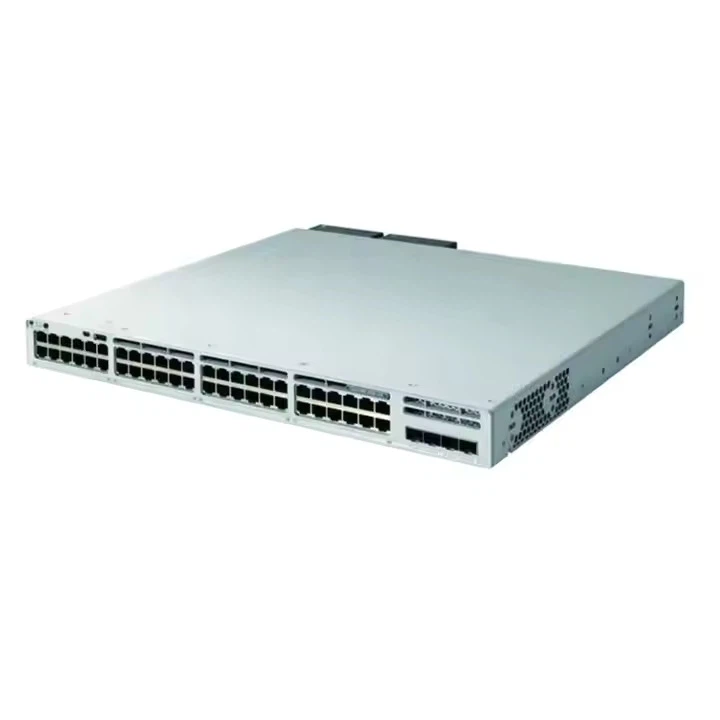
The Switch Cisco Catalyst 9300 is a more advanced switch suitable for larger enterprise networks. It supports a wide range of load - balancing methods, including ECMP and LACP, and offers high - performance and reliability.
Another great option is the Switch Cisco C9200. This switch is designed for modern data center environments and provides advanced load - balancing features to ensure efficient traffic distribution.
Contact for Purchase and Consultation
If you are interested in purchasing Cisco switches or need more information about load - balancing methods, we are here to help. Our team of experts can provide you with detailed advice on the best switch for your specific needs and assist you in configuring the load - balancing methods. Whether you are a small business or a large enterprise, we have the right solution for you.
References
- Cisco Systems, Inc. "Cisco Switch Configuration Guides."
- Network Management and Optimization textbooks.
- Online resources on Cisco network technologies.