

Hey there! As a supplier of 128G RAM, I often get asked about the error - correction capability of this high - capacity memory. So, let's dive right in and break it down in simple terms.
Understanding Memory Errors
First off, we need to know what memory errors are. In a computer system, RAM is constantly storing and retrieving data. Sometimes, due to electrical interference, manufacturing defects, or just plain old wear and tear, the data stored in the RAM can get corrupted. These corrupted bits are what we call memory errors.
There are two main types of memory errors: single - bit errors and multi - bit errors. A single - bit error is when just one bit of data in the RAM changes from its correct value. Multi - bit errors, on the other hand, involve multiple bits being changed.
Error - Correction in RAM
Error - correction in RAM is all about detecting and fixing these errors. The most common method used is ECC (Error - Correcting Code). ECC RAM uses extra bits of data to store parity information. This parity information allows the system to detect when a bit has been flipped and, in many cases, correct it.
Let's take a closer look at how ECC works. When data is written to the RAM, the ECC algorithm calculates a parity value for that data. This parity value is then stored along with the actual data. When the data is read back, the system recalculates the parity value. If the recalculated value doesn't match the stored value, it means an error has occurred.
For single - bit errors, ECC can usually correct the error on the fly without any intervention from the user. This is a huge advantage, especially in systems where data integrity is crucial, like servers or workstations.
Error - Correction Capability of 128G RAM
Now, let's talk specifically about 128G RAM. The error - correction capability of 128G RAM depends on whether it's ECC RAM or non - ECC RAM.


Non - ECC 128G RAM
Non - ECC RAM doesn't have the built - in error - correction feature. It's cheaper and more commonly used in consumer - grade computers like laptops and desktops. If a memory error occurs in non - ECC 128G RAM, the system won't be able to detect or correct it automatically. This can lead to all sorts of problems, from minor glitches like program crashes to more serious issues like data corruption.
ECC 128G RAM
ECC 128G RAM, on the other hand, is designed to handle errors. Most ECC 128G RAM modules can correct single - bit errors and detect multi - bit errors. The exact error - correction capability can vary depending on the specific ECC algorithm used.
For example, some ECC algorithms can correct single - bit errors and detect double - bit errors. In a 128G RAM module using such an algorithm, if a single bit gets flipped, the system will be able to correct it without any loss of data or system stability. However, if two or more bits are flipped at the same time, the system will be able to detect that an error has occurred but won't be able to correct it on its own. In such cases, the system might need to take corrective actions like restarting the affected program or even the entire system.
Importance of Error - Correction in 128G RAM
With the increasing demand for high - capacity memory, 128G RAM is becoming more popular in both consumer and enterprise applications. In enterprise settings, where data integrity is of utmost importance, ECC 128G RAM is a must - have.
For example, in a large - scale database server, a single memory error can lead to incorrect data being stored or retrieved, which can have serious consequences for the business. ECC 128G RAM helps prevent such errors and ensures the smooth operation of the server.
In the consumer market, while non - ECC 128G RAM might be sufficient for most users, those who engage in activities like video editing, 3D modeling, or gaming at a professional level might benefit from the added data integrity provided by ECC RAM.
Comparing with Other RAM Sizes
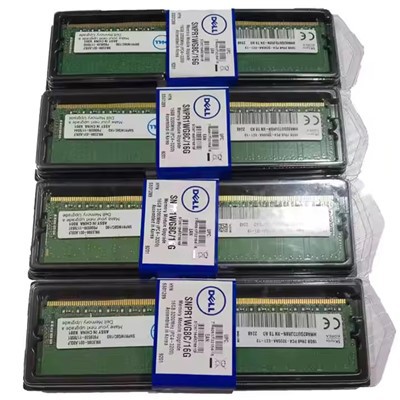
Let's compare the error - correction capability of 128G RAM with other common RAM sizes like Dell 32G RAM and Dell 16G RAM.
The basic principle of error - correction remains the same across different RAM sizes. However, larger RAM modules like 128G have a higher probability of experiencing memory errors simply because there are more bits of data being stored. This is where the error - correction feature of ECC RAM becomes even more important.
A Dell 32G RAM module might be sufficient for a small - to - medium - sized business or a home user with moderate computing needs. But as the demand for memory increases, upgrading to a 128G RAM module can provide the necessary performance boost. And if data integrity is a concern, choosing an ECC 128G RAM module is a wise decision.
Our Offerings
As a supplier of 128G RAM, we offer both non - ECC and ECC options to meet the diverse needs of our customers. Our ECC 128G RAM modules are designed to provide the highest level of data integrity, while our non - ECC modules are perfect for those on a budget or who don't require strict error - correction.
We also have a wide range of Dell 32G 8G 16G 128G RAM options to suit different computer systems and applications. Whether you're looking to upgrade your home computer or build a high - performance server, we've got you covered.
Contact Us for Procurement
If you're interested in purchasing 128G RAM or any of our other memory products, we'd love to hear from you. We can provide you with detailed product information, pricing, and technical support. Don't hesitate to reach out to us to start a procurement discussion.
References
- Patterson, D. A., & Hennessy, J. L. (2017). Computer Organization and Design: The Hardware/Software Interface. Morgan Kaufmann.
- Stallings, W. (2018). Computer Organization and Architecture: Designing for Performance. Pearson.