

As a supplier of Huawei switches, I often get asked about the switching capacity of Huawei switches. Understanding the switching capacity is crucial for anyone looking to build or upgrade a network, as it directly impacts the network's performance and ability to handle data traffic. In this blog post, I'll delve into what switching capacity is, how it's measured, and explore the switching capacities of some popular Huawei switch models.
What is Switching Capacity?
Switching capacity, also known as backplane bandwidth, refers to the maximum amount of data that a switch can transfer between its ports at the same time. It represents the switch's internal data transfer capability and is a key indicator of the switch's performance. A higher switching capacity means the switch can handle more concurrent data streams, reducing the likelihood of data bottlenecks and ensuring smooth network operation.
Switching capacity is typically measured in gigabits per second (Gbps) or terabits per second (Tbps). For example, a switch with a switching capacity of 1 Tbps can transfer up to 1 trillion bits of data per second. When evaluating a switch, it's important to consider the switching capacity in relation to the number of ports and the expected traffic volume on the network.
How is Switching Capacity Measured?
There are two main methods for measuring switching capacity: wire-speed forwarding and non - wire - speed forwarding.
Wire - speed Forwarding
Wire - speed forwarding means that the switch can forward data packets at the maximum rate supported by the physical interface. For example, a 1 Gigabit Ethernet port can transmit data at a rate of 1 Gbps. A switch that supports wire - speed forwarding on all its ports can handle the full - rate traffic on each port simultaneously. To calculate the theoretical wire - speed forwarding capacity of a switch, you multiply the number of ports by the port speed. For instance, a 24 - port 1 Gigabit Ethernet switch would have a theoretical wire - speed forwarding capacity of 24 Gbps.
Non - wire - speed Forwarding
Non - wire - speed forwarding occurs when the switch cannot forward data at the maximum rate supported by the physical interface. This can happen when the switch's internal architecture or processing power is insufficient to handle the full - rate traffic on all ports. In non - wire - speed forwarding scenarios, the actual switching capacity may be lower than the theoretical capacity.
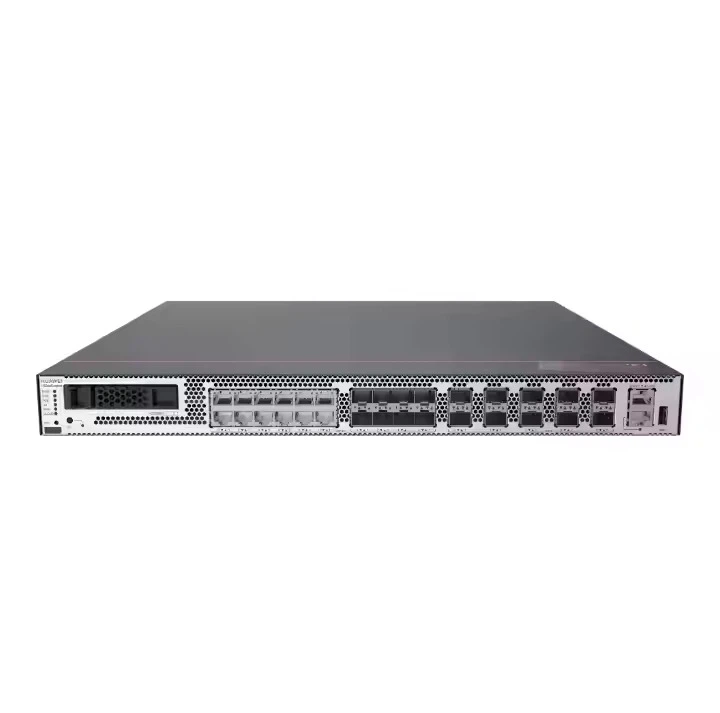

Switching Capacities of Popular Huawei Switch Models
Huawei S5700 Switch
The Huawei S5700 Switch is a series of Ethernet switches designed for enterprise campus networks. These switches offer high - performance switching capabilities and are available in various port configurations.
The switching capacity of the Huawei S5700 series varies depending on the specific model. Generally, the S5700 series can support switching capacities ranging from several hundred Gbps to over 1 Tbps. For example, some models in the series can provide a switching capacity of up to 960 Gbps, which is sufficient to handle the data traffic of a medium - sized enterprise network. With its high switching capacity, the Huawei S5700 switch can support wire - speed forwarding on multiple ports, ensuring efficient data transfer and low latency.
Huawei Switch S6730
The Huawei Switch S6730 is a high - end Ethernet switch suitable for large - scale enterprise networks and data centers. It features a modular design and advanced switching technology, offering excellent performance and scalability.
The Huawei Switch S6730 has a very high switching capacity, typically reaching several Tbps. This high capacity allows the switch to handle a large volume of data traffic, making it ideal for networks with high - density servers and high - bandwidth applications. The S6730 can support wire - speed forwarding on all its ports, providing seamless connectivity and high - speed data transfer.
Huawei S5731 S24P4X
The Huawei S5731 S24P4X is a compact and high - performance switch designed for small to medium - sized enterprise networks. It offers 24 Gigabit Ethernet ports and 4 10 Gigabit Ethernet ports, providing a good balance between port density and high - speed connectivity.
The switching capacity of the Huawei S5731 S24P4X is designed to support wire - speed forwarding on all its ports. It has a switching capacity of up to 1.5 Tbps, which enables it to handle the concurrent traffic on all ports efficiently. This switch is suitable for networks that require a combination of high - speed uplinks and a large number of Gigabit Ethernet connections.
Factors Affecting Switching Capacity
Port Density
The number of ports on a switch directly affects its switching capacity requirements. A switch with a large number of ports needs a higher switching capacity to ensure that all ports can operate at wire - speed. For example, a 48 - port switch will require a higher switching capacity than a 24 - port switch to support the same level of traffic on each port.
Traffic Patterns
The type and volume of traffic on the network also impact the switching capacity. Networks with a high volume of multicast or broadcast traffic may require a higher switching capacity to handle the additional data. Similarly, networks with applications that generate large amounts of data, such as video streaming or data backup, will need a switch with sufficient switching capacity to prevent congestion.
Future Growth
When selecting a switch, it's important to consider future growth. As the network expands and the number of devices and applications increases, the traffic volume will also grow. Choosing a switch with a higher switching capacity than the current requirements can provide room for future expansion and ensure that the network can handle the increased traffic without performance degradation.
Why Choose Huawei Switches?
Huawei switches are known for their high - quality, reliability, and advanced technology. With a wide range of switch models available, Huawei can meet the needs of different types of networks, from small - scale office networks to large - scale data centers.
Huawei's switches are designed with advanced switching architectures and high - performance components, which ensure high switching capacities and efficient data transfer. They also support a variety of features such as VLAN, QoS, and security protocols, which enhance the functionality and security of the network.
In addition, Huawei provides excellent technical support and after - sales service, which is crucial for maintaining the stability and performance of the network. As a Huawei switch supplier, I can offer you professional advice and solutions to help you select the right switch for your network.
Conclusion
Switching capacity is a critical factor to consider when choosing a Huawei switch or any other network switch. It determines the switch's ability to handle data traffic and ensure smooth network operation. By understanding what switching capacity is, how it's measured, and the switching capacities of different Huawei switch models, you can make an informed decision when building or upgrading your network.
If you are interested in purchasing Huawei switches or need more information about their switching capacities, please feel free to contact me for a detailed discussion. I am here to provide you with the best solutions tailored to your specific network requirements.
References
- Huawei official product documentation
- Industry reports on network switching technology