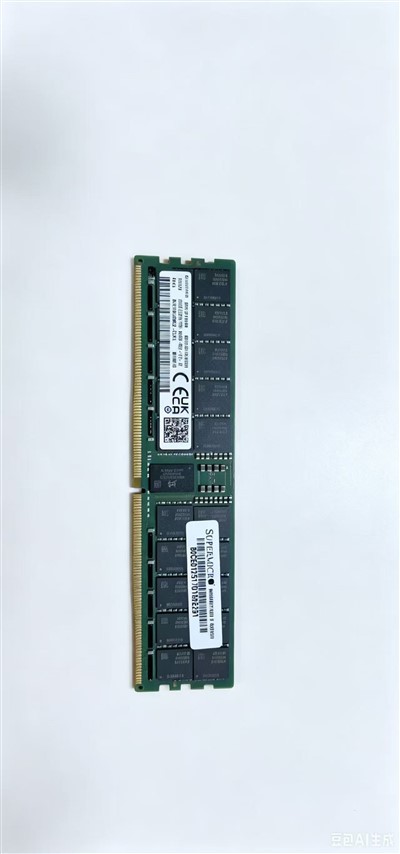

Procurement personnel often confuse server memory with standard desktop RAM. While they may appear visually similar, they differ fundamentally in underlying hardware design, operational standards, and fault-tolerance mechanisms. The two are strictly non-interchangeable; mispairing them can directly lead to blue screens, data loss, or even permanent hardware damage.
Error-Correction Technology
The primary distinction lies in error-correction capability. Server memory is equipped with Error-Correcting Code (ECC) chips, whereas desktop RAM lacks this module. Data center servers are required to operate continuously 24/7, making them highly susceptible to single-bit data flips during massive read/write operations. The ECC functionality detects and automatically corrects minor read/write errors in real time, preventing system crashes. In contrast, home desktops are powered on and off daily, where the probability of data errors is extremely low, allowing manufacturers to omit the correction module to reduce costs.
Load Tolerance
Server memory is built with thickened printed circuit boards (PCBs) and industrial-grade DRAM chips, supporting high-density configurations across all memory slots while maintaining stable voltage and temperature levels under full loads. On the other hand, desktop motherboards typically support only up to 4 to 6 memory modules. When fully populated, desktop systems are prone to overheating and thermal throttling, making them unable to endure continuous 24/7 workloads.
Architectural Compatibility and Capacity Limits
Server memory modules differ completely from desktop RAM in pin definitions and key notch positioning, making their physical slots mutually incompatible. Attempting to force-install a module will fail. Furthermore, a single server memory stick can reach capacities of up to 128GB, whereas consumer desktop RAM is currently capped at 64GB per module-highlighting a significant gap in maximum memory density.
Distinct Application Scenarios
The operational boundaries between the two are clearly defined: desktop RAM is tailored strictly for personal office work and gaming setups, while server memory is reserved exclusively for server rooms, cloud computing infrastructure, and data centers. Although some small enterprises attempt to mix these memory types to cut costs-and may temporarily achieve system boot-up-long-term high-load operations frequently trigger application crashes and database corruption. This exposes critical business operations to extreme risks of data loss, which is why professional IT operation standards strictly prohibit cross-type memory usage.