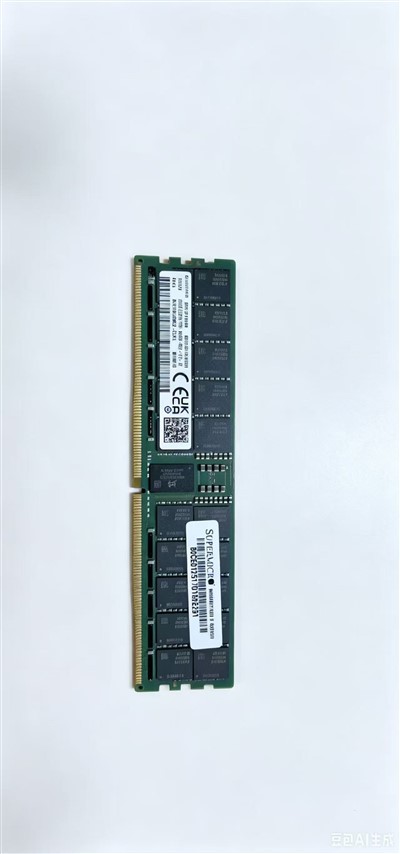

Data-intensive industries-such as AI model training, 4K video rendering, and distributed financial databases-demand extreme server memory capacity. Single-module 128GB high-capacity server RAM has emerged to meet this demand, becoming a standard core hardware component for supercomputing data centers and major cloud service providers while reshaping the architecture of high-density computing clusters.
Solving Slot Constraints & Lowering Latency
- Maximizing Memory Density: Traditional medium and small-capacity modules quickly fill motherboard slots. In a server with 8–12 memory slots, 32GB modules cap total capacity at 384GB. Upgrading to 128GB modules achieves 384GB using just 3 slots, preserving valuable slot resources for future expansion with accelerator cards and high-speed NVMe storage.
- Lower Latency & Power Optimization: Built with 3D stacked DRAM die technology and integrated Power Management ICs (PMIC), these modules control single-bar power consumption for continuous 24/7 high-load operations. Utilizing fewer, higher-density modules reduces signal bus attenuation and lowers multi-threaded read/write latency, significantly accelerating AI training and batch video rendering.
Deployment Considerations & TCO
128GB modules require high-end enterprise server platforms; consumer-grade or mid-range data center hardware cannot recognize this specification, making pre-purchase motherboard compatibility checks essential. While the initial unit cost of a 128GB module is higher, building a target capacity with fewer modules lowers labor, installation, and long-term maintenance costs-resulting in a lower total cost of ownership (TCO).
As demand for real-time big data processing explodes, adoption of 128GB server RAM continues to rise, establishing it as an essential hardware upgrade for modern data center infrastructure.