

As a supplier of HPE workstations, I've had numerous customers ask me if these machines are up to the task of scientific research. The short answer? Absolutely! In this blog post, I'll dive into why HPE workstations are a great fit for scientific research, and I'll also give you a rundown of some of the top models we offer.
Why HPE Workstations?
Scientific research often involves complex simulations, data analysis, and high-resolution visualizations. These tasks require a workstation that can handle heavy workloads and provide reliable performance. HPE workstations are designed with these requirements in mind, offering powerful processors, high-speed memory, and advanced graphics capabilities.


Powerful Processors
HPE workstations are equipped with the latest Intel Xeon processors, which offer multiple cores and high clock speeds. This allows researchers to run multiple simulations and data analysis tasks simultaneously, significantly reducing processing time. For example, a researcher working on a climate simulation can use a multi-core Xeon processor to parallelize the simulation, speeding up the overall process.
High-Speed Memory
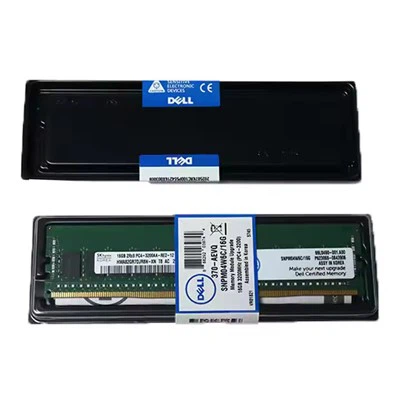
Memory is crucial for scientific research, especially when dealing with large datasets. HPE workstations support high-capacity DDR4 memory modules, allowing researchers to store and access large amounts of data quickly. This is particularly important for tasks such as genomics research, where scientists need to analyze vast amounts of genetic data.
Advanced Graphics Capabilities
Many scientific research projects involve visualizing data in 3D, such as molecular modeling or astrophysics simulations. HPE workstations come with professional-grade NVIDIA Quadro graphics cards, which provide high-resolution graphics and real-time rendering capabilities. This allows researchers to visualize their data in detail and gain insights that might not be apparent from raw data alone.
Top HPE Workstation Models for Scientific Research
Now that we've covered why HPE workstations are a great choice for scientific research, let's take a look at some of the top models we offer.
HP Z1 G9 Workstation
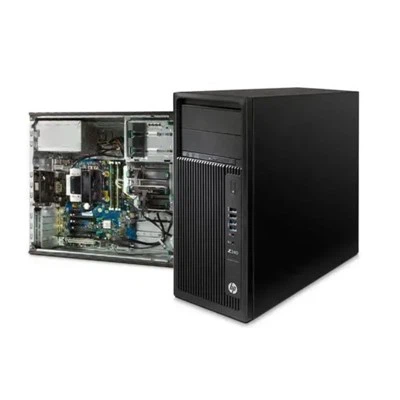
The HP Z1 G9 Workstation is a compact and powerful workstation that is perfect for researchers who need a high-performance machine in a small form factor. It features the latest Intel Xeon processors, up to 128GB of DDR4 memory, and NVIDIA Quadro graphics. The Z1 G9 also offers easy access to internal components, making it easy to upgrade and maintain.
Workstation Z2 G9
The Workstation Z2 G9 is a versatile and affordable workstation that is ideal for small research teams or individual researchers. It offers a range of processor options, up to 128GB of memory, and NVIDIA Quadro graphics. The Z2 G9 also features a modular design, allowing researchers to customize the workstation to meet their specific needs.
Workstation HP Z8 G4
The Workstation HP Z8 G4 is a high-end workstation that is designed for large research projects and demanding scientific applications. It features the latest Intel Xeon processors, up to 3TB of DDR4 memory, and NVIDIA Quadro graphics. The Z8 G4 also offers advanced cooling technology and redundant power supplies, ensuring reliable performance even under heavy workloads.
Real-World Applications
To give you an idea of how HPE workstations are being used in scientific research, let's take a look at a few real-world examples.
Medical Research
In the field of medical research, HPE workstations are being used to analyze medical images, such as MRI and CT scans. Researchers can use advanced image processing software to detect diseases and abnormalities in the images, which can help in early diagnosis and treatment. For example, a team of researchers at a leading medical university used an HPE workstation to analyze brain scans of Alzheimer's patients, helping them to identify early signs of the disease.
Environmental Science
Environmental scientists are using HPE workstations to model climate change and analyze environmental data. These models can help them to understand the impact of human activities on the environment and develop strategies to mitigate climate change. For instance, a research group at a national environmental research institute used an HPE workstation to simulate the effects of deforestation on global climate patterns.
Astrophysics
Astrophysicists are using HPE workstations to analyze data from telescopes and satellites. These workstations can handle the large amounts of data generated by these instruments and perform complex calculations to understand the structure and evolution of the universe. For example, a team of astrophysicists at a renowned observatory used an HPE workstation to analyze data from a recent space mission, helping them to discover a new planet.
Conclusion
In conclusion, HPE workstations are a great choice for scientific research. They offer powerful processors, high-speed memory, and advanced graphics capabilities, making them suitable for a wide range of scientific applications. Whether you're a medical researcher, an environmental scientist, or an astrophysicist, an HPE workstation can help you to perform your research more efficiently and effectively.
If you're interested in learning more about our HPE workstations or would like to discuss your specific research needs, please don't hesitate to contact us. We'd be happy to help you find the perfect workstation for your project.
References
- Intel Xeon Processor Family Documentation
- NVIDIA Quadro Graphics Card Specifications
- HP Z Series Workstation Product Guides