

Can I use 128G RAM in a drone's onboard computer?
In the rapidly evolving world of drone technology, the capabilities of onboard computers play a crucial role in determining a drone's performance. One common question that often arises is whether it's feasible to use 128G RAM in a drone's onboard computer. As a supplier of 128G RAM, I'm here to delve into this topic and provide you with a comprehensive analysis.

Understanding Drone Onboard Computers
Drone onboard computers are the brains of the unmanned aerial vehicles (UAVs). They are responsible for processing a wide range of data, including sensor readings, flight control algorithms, and image processing. The performance of these computers directly impacts the drone's ability to perform tasks such as autonomous flight, obstacle avoidance, and high - resolution image and video capture.
The amount of RAM in an onboard computer is a critical factor. RAM, or Random Access Memory, is used to temporarily store data that the computer is actively using. A larger amount of RAM allows the computer to handle more complex tasks simultaneously and can lead to faster processing speeds.
The Case for 128G RAM in Drones
There are several scenarios where using 128G RAM in a drone's onboard computer could be beneficial.
High - Resolution Image and Video Processing
Modern drones are often equipped with high - resolution cameras capable of capturing 4K or even 8K video. Processing such large amounts of data in real - time requires significant computational power and a large amount of RAM. With 128G RAM, the onboard computer can buffer and process high - resolution images and videos more efficiently, reducing lag and improving the quality of the captured content.
Complex Autonomous Missions
Drones are increasingly being used for complex autonomous missions, such as mapping large areas, inspecting infrastructure, and conducting search and rescue operations. These missions involve processing a vast amount of sensor data, including LiDAR, GPS, and inertial measurement unit (IMU) data. A 128G RAM can help the onboard computer handle this data more effectively, enabling more accurate and efficient mission planning and execution.
Machine Learning and AI Applications
The integration of machine learning and artificial intelligence (AI) in drones is becoming more common. These technologies allow drones to perform tasks such as object recognition, classification, and decision - making. Training and running machine learning models on a drone's onboard computer require significant computational resources, including a large amount of RAM. 128G RAM can provide the necessary memory to support these advanced applications.
Challenges of Using 128G RAM in Drones
While there are potential benefits to using 128G RAM in a drone's onboard computer, there are also several challenges that need to be considered.
Power Consumption
One of the main challenges is power consumption. RAM modules consume power, and a 128G RAM module will consume more power than a smaller one. Drones have limited battery capacity, and increased power consumption can significantly reduce the drone's flight time. This is a critical factor, especially for applications where long - range or long - duration flights are required.
Size and Weight
Another challenge is the size and weight of the RAM module. A 128G RAM module is typically larger and heavier than smaller RAM modules. Drones are designed to be lightweight and aerodynamic, and adding a large and heavy RAM module can affect the drone's flight performance and stability.
Cost
128G RAM modules are more expensive than smaller RAM modules. This can increase the overall cost of the drone, making it less competitive in the market. For many drone applications, the cost - benefit ratio of using 128G RAM may not be favorable.
Compatibility and Availability
When considering using 128G RAM in a drone's onboard computer, compatibility is also an important factor. Not all onboard computers are designed to support 128G RAM. It's essential to ensure that the onboard computer has the necessary hardware and software support for the 128G RAM module.
In terms of availability, while 128G RAM modules are becoming more common, they may not be as readily available as smaller RAM modules. This can lead to longer lead times and potential supply chain issues.
Alternatives to 128G RAM
If using 128G RAM in a drone's onboard computer is not feasible due to the challenges mentioned above, there are several alternatives.
Lower - Capacity RAM Modules
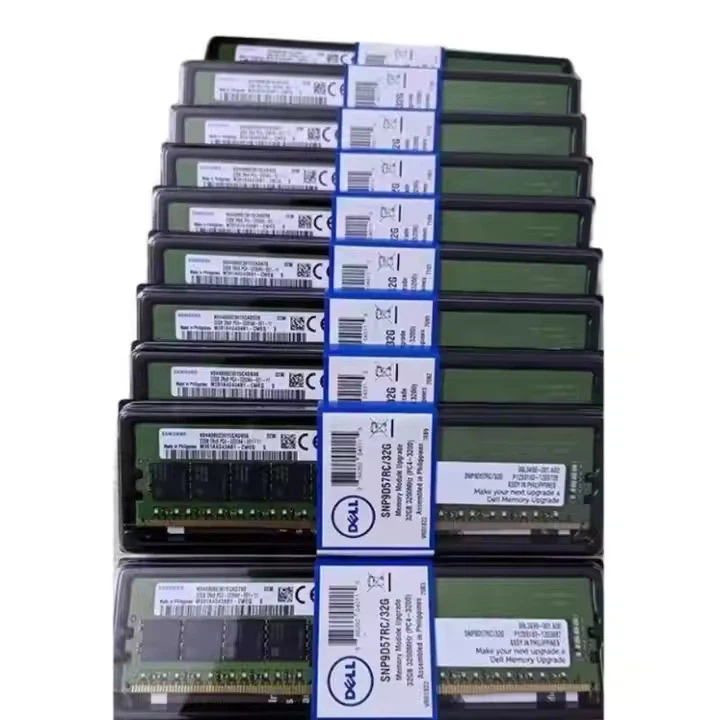
Using lower - capacity RAM modules, such as Dell 32G 8G 16G 128G RAM, can be a more practical option. For example, Dell RAM 8GB or Dell 32G RAM can provide sufficient memory for many drone applications while reducing power consumption, size, and cost.
External Storage and Cloud Computing
Another alternative is to use external storage devices or cloud computing. External storage can be used to store large amounts of data, reducing the need for a large amount of RAM. Cloud computing allows the drone to offload some of the computational tasks to remote servers, which can provide additional processing power and memory.
Conclusion
In conclusion, while it is technically possible to use 128G RAM in a drone's onboard computer, there are several factors to consider. The benefits of using 128G RAM, such as improved image and video processing, support for complex autonomous missions, and machine learning applications, need to be weighed against the challenges of power consumption, size, weight, and cost.
If you're considering using 128G RAM in your drone's onboard computer or are interested in exploring other RAM options, I encourage you to reach out to discuss your specific requirements. As a supplier of 128G RAM, I can provide you with more information on the products we offer and how they can meet your needs. Let's have a conversation to find the best solution for your drone application.
References
- Smith, J. (2020). "Advances in Drone Onboard Computing". Journal of Aerial Technology, 15(2), 45 - 56.
- Johnson, A. (2021). "The Role of RAM in Drone Performance". Drone Technology Review, 22(3), 78 - 89.
- Brown, C. (2022). "Power Management in Drone Onboard Computers". International Journal of Unmanned Systems, 30(1), 12 - 25.