

In the fast - paced world of technology, the demand for high - performance computing solutions is ever - increasing. As a leading provider of 128G RAM, I often encounter questions from tech enthusiasts, businesses, and professionals about how 128G RAM works in conjunction with a solid - state drive (SSD). In this blog post, I'll delve into the technical aspects of this powerful combination and explain why it's a game - changer for many computing applications.

Understanding RAM and SSD
Before we discuss how 128G RAM and an SSD work together, let's briefly understand what each component does.
Random Access Memory (RAM) is a type of volatile memory that stores data that the computer's processor can access quickly. When you open an application or a file, the data is loaded from the storage device (such as an SSD) into the RAM. The processor can then read and write data to the RAM at extremely high speeds, which allows for smooth and efficient operation of the software. The more RAM you have, the more data the computer can keep readily available for the processor, reducing the need to constantly fetch data from the slower storage device.
A solid - state drive, on the other hand, is a non - volatile storage device that uses flash memory to store data. Unlike traditional hard disk drives (HDDs) that have moving parts, SSDs have no moving components, which makes them much faster in terms of data access and transfer speeds. SSDs are used to store the operating system, applications, and user data on a long - term basis.
How 128G RAM and SSD Work Together
Data Loading and Initialization
When you start your computer, the operating system is loaded from the SSD into the RAM. With 128G of RAM, a large portion of the operating system and frequently used system files can be stored in the RAM, which significantly reduces the boot time. The computer can quickly access these files from the RAM instead of repeatedly reading them from the SSD.
For example, when you open a complex software application like a 3D modeling program or a high - end video editing suite, the application's executable files and initial data are loaded from the SSD into the RAM. With 128G of RAM, the entire application can be loaded into the RAM at once, allowing for instant access to all its features and functions. This is in contrast to systems with less RAM, where parts of the application may need to be swapped in and out of the RAM, causing slowdowns and delays.
Multitasking and Concurrent Operations
One of the main advantages of having 128G of RAM is the ability to handle multiple tasks simultaneously. You can have several memory - intensive applications running at the same time without experiencing significant performance degradation. For instance, you could be running a virtual machine with a full - fledged operating system, a large - scale database management system, and a resource - hungry graphics application all at once.
The SSD plays a crucial role in this scenario as well. When the RAM starts to fill up, the operating system may use a technique called "swapping" or "paging." It moves some of the less frequently used data from the RAM to the SSD's page file. With a fast SSD, this data transfer process is relatively quick, minimizing the impact on performance. And when the data is needed again, it can be quickly retrieved from the SSD back into the RAM.
Data Processing and Caching
In data - intensive applications such as scientific research, financial analysis, and big data processing, 128G of RAM can store a vast amount of data for processing. The processor can access this data directly from the RAM at high speeds, without having to wait for data to be retrieved from the SSD.
Moreover, the SSD can be used as a cache for the RAM. Some operating systems and applications use a technique called "disk caching," where frequently accessed data from the SSD is stored in a cache in the RAM. This further improves the overall performance by reducing the number of times the computer needs to access the SSD.
Advantages of the 128G RAM and SSD Combination
Performance
The combination of 128G RAM and an SSD offers unparalleled performance. Applications load faster, multitasking is seamless, and data processing is extremely efficient. This is especially beneficial for professionals who rely on high - performance computing for their work, such as graphic designers, video editors, software developers, and data scientists.
Productivity
With faster performance, users can complete their tasks more quickly. They can switch between applications without waiting for long loading times, and they can run complex simulations and analyses in a shorter period. This leads to increased productivity and a better user experience.
Future - Proofing
As software applications become more complex and data - intensive, having 128G of RAM and an SSD ensures that your system can handle future software updates and new applications without becoming obsolete quickly. It provides a solid foundation for long - term use and growth.
Applications That Benefit from 128G RAM and SSD
Content Creation
In the field of content creation, such as video editing, 3D modeling, and graphic design, 128G of RAM allows for smooth editing of high - resolution videos and large - scale 3D models. The SSD ensures that the source files and project data can be quickly accessed and saved.
Gaming
Although most games do not currently require 128G of RAM, some high - end gaming setups with virtual reality (VR) support and modded games can benefit from the additional memory. The SSD provides fast loading times for game assets, reducing the waiting time between levels and during game startup.
Enterprise and Data Centers
In enterprise environments and data centers, 128G RAM and SSDs are used to support large - scale databases, virtualization, and cloud computing. The high - performance combination ensures that multiple users can access and process data simultaneously without experiencing slowdowns.
Our 128G RAM Offerings
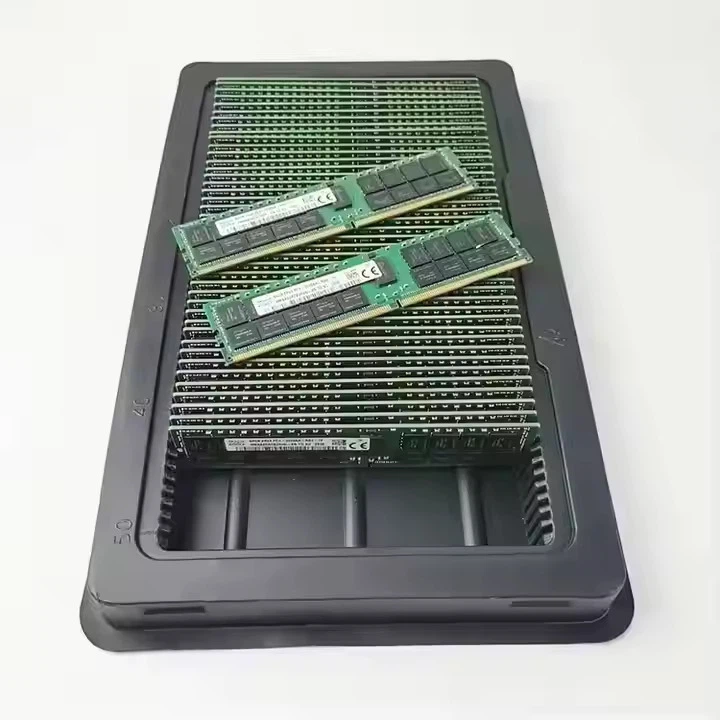
As a supplier of 128G RAM, we offer high - quality, reliable memory modules that are compatible with a wide range of systems. Our RAM modules are designed to work seamlessly with SSDs, providing the best possible performance.
If you are interested in upgrading your system with our 128G RAM, or if you want to learn more about how it can work with your existing SSD, we are here to help. We also offer other RAM options such as Dell 32G 8G 16G 128G RAM, Dell 16G RAM, and Dell 32G RAM.
Contact Us for Procurement
If you are considering purchasing our 128G RAM or have any questions about how it works with an SSD, we encourage you to reach out to us. Our team of experts is ready to assist you in making the right decision for your computing needs. Whether you are an individual user, a small business, or a large enterprise, we can provide you with the best solutions and support.
References
- Tanenbaum, A. S., & Bos, H. (2014). Modern Operating Systems. Pearson.
- Patterson, D. A., & Hennessy, J. L. (2017). Computer Organization and Design: The Hardware/Software Interface. Morgan Kaufmann.