

In the ever - evolving world of computer hardware, the demand for higher - performance systems with substantial memory capabilities has been on a relentless rise. One of the most common questions I, as a 128GB RAM supplier, encounter is whether 128GB of RAM is available in DDR4 technology. In this blog, we'll delve deep into this topic, covering various aspects such as the technical feasibility, practical applications, and comparisons with other available memory options.
Technical Feasibility of 128GB DDR4 RAM
DDR4, or Double Data Rate 4 Synchronous Dynamic Random - Access Memory, was a significant upgrade over its predecessor, DDR3. When it was introduced, it was lauded for higher data transfer rates, lower power consumption, and increased capacity per module. In theory, 128GB of RAM in DDR4 is entirely possible.
DDR4 allows for individual DIMMs (Dual In - line Memory Modules) to reach capacities of up to 64GB. So, by using two 64GB DDR4 DIMMs, you can achieve a total of 128GB of system memory. This is made possible due to advancements in semiconductor manufacturing technology. As chip manufacturers have been able to shrink the size of memory cells, they can pack more memory onto a single module.
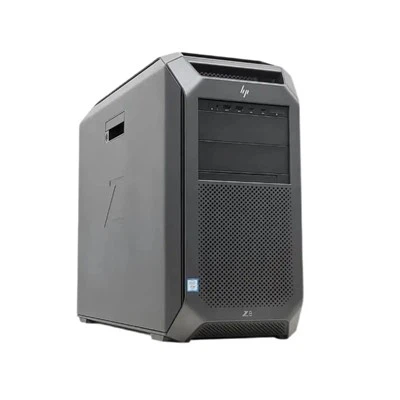
However, it's important to note that not all motherboards support such high - capacity configurations. Motherboards need to have the appropriate memory controller and BIOS support. High - end server motherboards and some enthusiast - grade desktop motherboards are more likely to support 128GB of DDR4 RAM. These motherboards are designed to handle the high - bandwidth requirements and the electrical load associated with large - capacity memory modules.
Practical Applications of 128GB DDR4 RAM
The need for 128GB of DDR4 RAM is not for the average home user. It is mainly driven by specific professional and high - performance computing needs.
Content Creation
In the field of content creation, such as video editing, 3D modeling, and animation, having a large amount of RAM is crucial. Video editors often work with high - resolution footage, which requires a significant amount of memory to store and process data. For example, when editing 8K video, the raw footage can be extremely large, and RAM is used to cache the video frames, apply filters, and perform real - time rendering. With 128GB of DDR4 RAM, video editors can work more efficiently, reducing the time spent on rendering and waiting for the system to respond.
Scientific Research
Scientists involved in data - intensive research, such as weather forecasting, genomics, and astrophysics, rely on powerful computers with large amounts of memory. In genomics, for instance, the analysis of DNA sequences involves working with huge datasets. 128GB of RAM allows researchers to load these datasets into memory, perform complex algorithms, and analyze the data much faster. Computational fluid dynamics simulations in engineering also benefit from high - capacity RAM, as they require storing large matrices and performing numerous calculations simultaneously.
Gaming and Virtual Reality
While most mainstream games don't require 128GB of RAM, there is a growing segment of the gaming community that is interested in high - end setups. Gamers who engage in virtual reality (VR) experiences and modding of games may find 128GB of RAM useful. VR games often demand a large amount of memory to create immersive and realistic environments. Additionally, modding games can add a significant amount of new content, which requires additional memory to run smoothly.
Comparison with Other Available Memory Options
When considering 128GB of RAM, it's essential to look at how DDR4 compares with other memory technologies and capacities.
DDR3 vs. DDR4
DDR3 was the previous standard in memory technology. While it was widely used, it has several limitations compared to DDR4. DDR3 has lower data transfer rates and a lower maximum capacity per module. In terms of achieving 128GB of RAM, using DDR3 would require more DIMMs, which could lead to increased power consumption and potentially more complex motherboard configurations. DDR4, on the other hand, offers a more efficient and compact solution for high - capacity memory needs.
Different Capacity Options
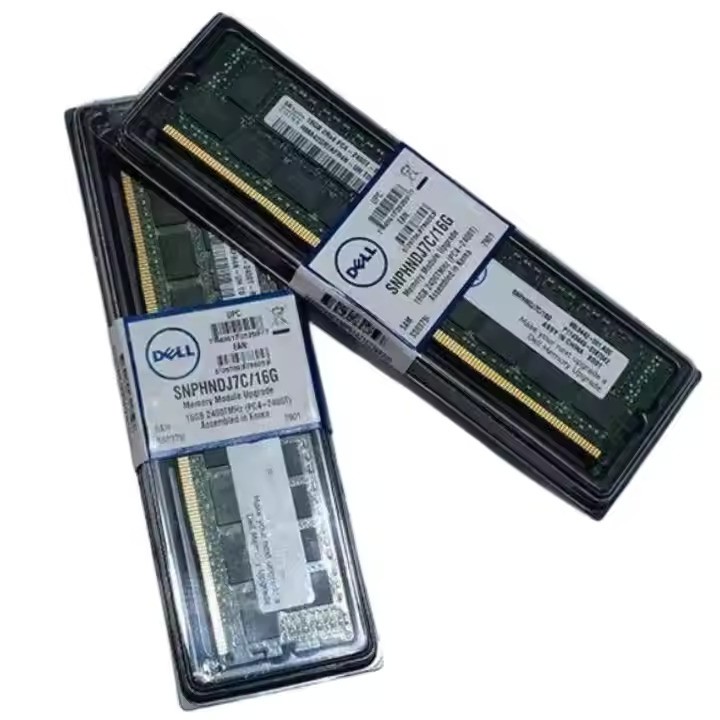
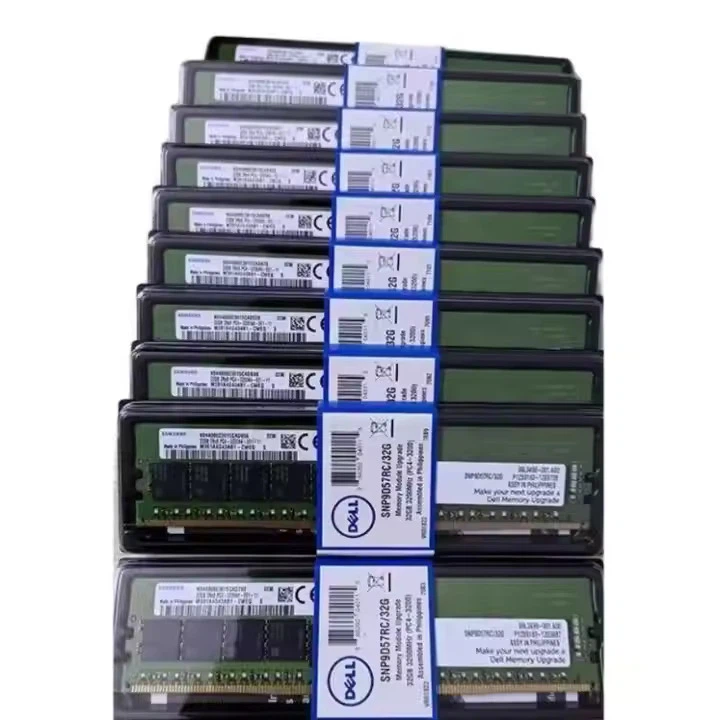
There are other common RAM capacities available in the market, such as Dell RAM 8GB, Dell 16G RAM, and Dell 32G RAM. These lower - capacity options are suitable for budget - conscious users or those with less demanding computing needs. For example, an average home user who uses their computer for web browsing, word processing, and light gaming may only need 8GB or 16GB of RAM. However, as the complexity of tasks increases, upgrading to a higher - capacity configuration becomes necessary.
Addressing Concerns and Misconceptions
One of the common misconceptions about 128GB of DDR4 RAM is that it's always needed for high - performance computing. In reality, the amount of RAM a system needs depends on the specific applications and the workload. For some users, investing in 128GB of RAM may be overkill. It's important to evaluate the requirements carefully before making a purchasing decision.
Another concern is the cost. High - capacity DDR4 RAM modules are more expensive than their lower - capacity counterparts. However, as technology advances and manufacturing processes become more efficient, the cost of 128GB of DDR4 RAM is gradually decreasing. This makes it more accessible for a wider range of users who have high - performance computing needs.
Contact for Purchase and Discussion
If you're a professional in content creation, scientific research, gaming, or any other field that requires high - performance computing and are interested in 128GB of DDR4 RAM, I encourage you to reach out to discuss your specific requirements. Whether you need advice on motherboard compatibility, performance optimization, or want to place an order, I'm here to assist.
References
- "DDR4 SDRAM Technology Overview" by JEDEC Solid State Technology Association.
- "High - Performance Computing: Memory Requirements and Trends" in Journal of Computational Sciences.
- "The Future of Memory in Content Creation" by TechMedia Research.