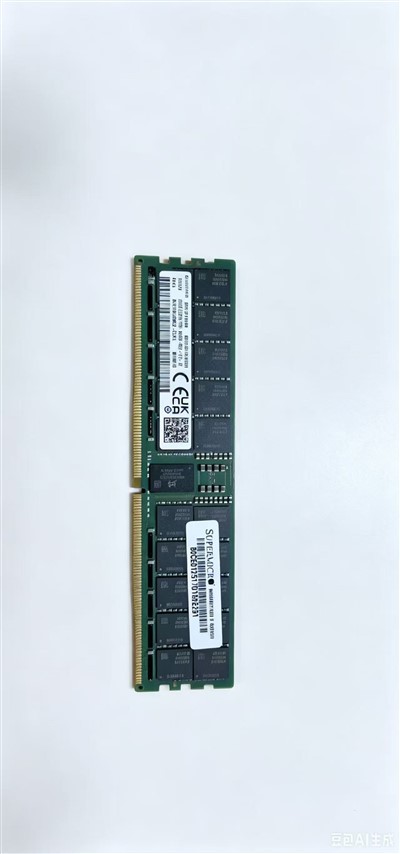
Computer RAM is a critical component in computer systems, providing volatile storage for processors to temporarily store and quickly access data. There are several types of RAM, each with its unique characteristics and use cases.
Dynamic Random Access Memory (DRAM)
Dynamic RAM is a commonly used type of RAM in computers that stores each piece of data in a separate capacitor within an integrated circuit. However, DRAM requires constant refreshing to preserve data, which may result in slower speeds compared to other types of memory.
Static Random Access Memory (SRAM)
SRAM is faster than DRAM and does not require constant refresh because it uses trigger circuits to store each bit of data. Due to its faster access speed, SRAM is often used in cache memory to achieve fast access to commonly used instructions and data.
Synchronous Dynamic Random Access Memory (SDRAM)
SDRAM synchronizes with the system clock speed, achieving more efficient data transfer. This synchronization can achieve stable data flow and reduce information access latency. Various types of SDRAM, such as Double Data Rate (DDR) SDRAM, are constantly evolving to provide higher data transfer rates.
Double Data Rate (DDR) Synchronous Dynamic Random Access Memory
DDR SDRAM transfers data on the rising and falling edges of clock signals, achieving a doubling of data transfer rate compared to traditional SDRAM. DDR RAM has gone through several generations, and each iteration (such as DDR3, DDR4, and DDR5) has achieved performance and efficiency improvements.
Double Data Rate (GDDR) synchronous graphics random access memory
GDDR SDRAM is designed specifically for graphics processing units (GPUs), with a focus on high-speed data transfer to meet the needs of graphics intensive applications such as gaming and video rendering. Similar to DDR RAM, GDDR has gone through several generations, each with enhanced memory bandwidth and performance compared to the previous generation.
Non volatile dual in-line memory module (NVDIMM)
Although most RAM is volatile and loses data when powered off, NVDIMM combines the speed of traditional RAM with the non-volatile nature of storage. Even if the system is powered off, NVDIMM can still retain data, making it suitable for applications where persistent memory is crucial.

 English
- English
- Français
- Deutsch
- 日本語
- Italiano
- Español
- Português
- русский
- íslenska
- O'zbek
- Việt Nam
- Srbija jezik (latinica)
- اردو
- bosanski
- Català
- Polski
- Eesti
- हिंदी
- Български
- Čeština
- Latviešu
- বাংলা
- Gaeilgenah Éireann
- suomi
- dansk
- Bai Miaowen
- Türkçe
- Indonesia
- عربي
- Svenska
- slovenčina
- magyar
- România limbi
- Lietuvių
- slovenščina
- فارسی
- ไทย
- Cymraeg
- Kreyòl Ayisyen
- Ελληνικά
- עברית
- Melayu
- Norsk
- 한국어
- hrvatski
- українська
- Malti
- Nederlands