

As a supplier of 16TB HDDs, I often get asked about the speed of these high - capacity hard disk drives. In this blog post, I'll delve into the factors that determine the speed of a 16TB HDD, compare it with other drives in the market, and provide a comprehensive understanding of its performance.
Understanding the Basics of HDD Speed
The speed of a hard disk drive is typically measured in two key metrics: rotational speed and data transfer rate.
Rotational Speed
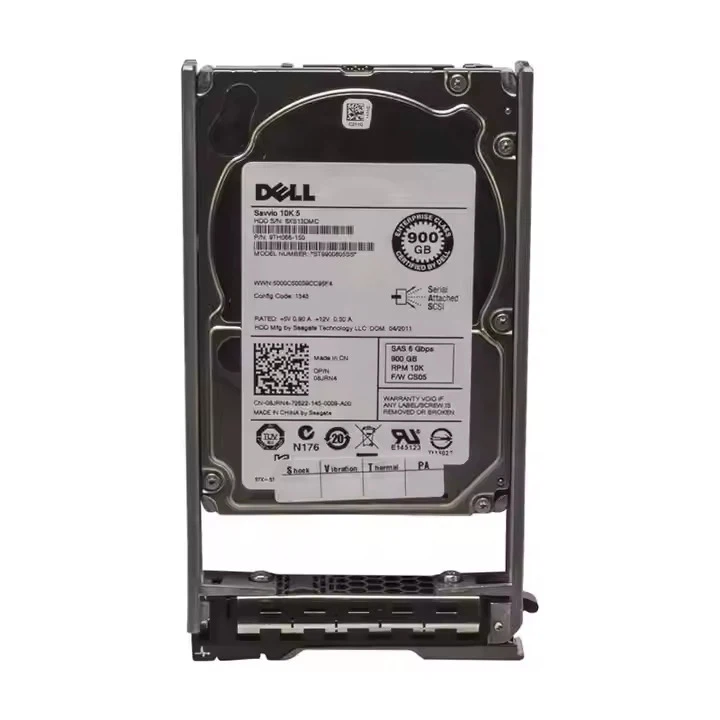
Rotational speed is measured in revolutions per minute (RPM). Most consumer - grade HDDs have a rotational speed of 5400 RPM or 7200 RPM. Enterprise - grade HDDs can go up to 10,000 RPM or even 15,000 RPM. A higher RPM generally means faster access to data because the read - write head can reach the desired data location more quickly.
For 16TB HDDs, the common rotational speed is 7200 RPM. At 7200 RPM, the platters inside the HDD spin 120 times per second. This relatively high speed allows for a quicker positioning of the read - write head over the data sectors, reducing the latency time.
Data Transfer Rate
The data transfer rate is another crucial aspect of HDD speed. It is divided into two types: internal and external data transfer rates.
The internal data transfer rate depends on how fast data can be read from or written to the platters. It is affected by the rotational speed, areal density (the amount of data that can be stored per square inch on the platters), and the distance of the data from the center of the platter. Data closer to the outer edge of the platter can be transferred faster than data near the center because the outer tracks have a larger circumference and thus cover more distance per rotation.
The external data transfer rate, on the other hand, is determined by the interface between the HDD and the computer system. Common interfaces for HDDs include SATA and SAS. SATA III, which is widely used, has a maximum theoretical transfer rate of 6 Gbps (gigabits per second). However, in real - world scenarios, the actual transfer rate is usually much lower due to various factors such as the internal transfer rate of the HDD, system overhead, and the performance of the connected hardware.
How Fast is a 16TB HDD in Real - World Scenarios?
In real - world use, the speed of a 16TB HDD can vary significantly depending on the task.
Sequential Read/Write Speeds
Sequential read and write operations involve accessing or writing large blocks of contiguous data. For a 16TB HDD with a 7200 RPM rotational speed and a SATA III interface, the sequential read speed can range from 180 MB/s to 220 MB/s, while the sequential write speed can be around 160 MB/s to 200 MB/s. These speeds are sufficient for tasks such as backing up large files, transferring large amounts of data between storage devices, or streaming high - definition video content.
Random Read/Write Speeds
Random read and write operations are more common in everyday use, such as opening applications, accessing small files, and running database queries. The random read/write speeds of a 16TB HDD are much lower compared to sequential speeds. Random read speeds can be around 1 - 2 MB/s, and random write speeds can be in the range of 0.5 - 1 MB/s. These relatively slow speeds are due to the mechanical nature of HDDs, which require the read - write head to move to different locations on the platters for each data access.
Comparison with Other HDD Capacities
To understand the speed performance of a 16TB HDD better, let's compare it with other HDD capacities available in the market.
8TB HDD
The Dell HDD 8TB is a popular choice for many users. In terms of speed, an 8TB HDD with similar specifications (7200 RPM, SATA III interface) will have comparable sequential and random read/write speeds to a 16TB HDD. The main difference lies in the storage capacity. The 16TB HDD offers twice the storage space, making it a better option for users who need to store large amounts of data such as media libraries, backups, and enterprise - level databases.
22TB HDD
The HDD 22TB is a high - end option with even more storage capacity. However, the speed characteristics of a 22TB HDD are not significantly different from a 16TB HDD as long as they have the same rotational speed and interface. The increase in capacity is mainly achieved through improvements in areal density rather than speed enhancements. This means that for most applications, the speed difference between a 16TB and a 22TB HDD will be negligible.
Factors Affecting the Speed of a 16TB HDD
Several factors can affect the actual speed performance of a 16TB HDD.
System Configuration
The performance of the host system can have a significant impact on the HDD speed. A computer with an outdated motherboard, a slow CPU, or insufficient RAM may limit the data transfer rate between the HDD and the system. For example, if the system's memory is constantly full, the HDD may have to wait for the CPU to free up resources before it can transfer data efficiently.
HDD Age and Usage
As an HDD ages and is used over time, its performance may degrade. The platters can experience wear and tear, and bad sectors may develop. These factors can slow down both sequential and random read/write operations. Regular maintenance, such as disk defragmentation and bad - sector checking, can help maintain the performance of the HDD to some extent.
Temperature
High temperatures can also affect the speed of an HDD. Excessive heat can cause the internal components of the HDD to expand, which may lead to mechanical problems and slower data access times. It is important to ensure proper ventilation and cooling for the HDD, especially in systems that are used for long periods or in high - temperature environments.
Is a 16TB HDD Fast Enough for Your Needs?
Whether a 16TB HDD is fast enough depends on your specific requirements.

Home Users
For home users, a 16TB HDD is usually more than sufficient. Most home users use their computers for general tasks such as web browsing, email, social media, and storing photos and videos. The sequential read/write speeds of a 16TB HDD are fast enough for backing up large photo or video collections, and the random read/write speeds are adequate for everyday application use.
Enterprise Users
Enterprise users, on the other hand, have more demanding requirements. In a corporate environment, applications may need to access large databases or perform real - time data processing. While a 16TB HDD can provide the necessary storage capacity, its relatively slow random read/write speeds may not be suitable for high - performance applications. In such cases, enterprise users may consider using a combination of HDDs and solid - state drives (SSDs) to balance storage capacity and speed.
Contact Us for Procurement
If you're interested in purchasing 16TB HDDs for your personal or business needs, we'd be more than happy to assist you. Our team of experts can provide you with detailed information about the products, help you choose the right configuration, and offer competitive pricing. Contact us today to start the procurement process and take advantage of the high - capacity and reliable storage solutions that our 16TB HDDs offer.
References
- Anderson, D. (2019). "The Basics of Hard Disk Drive Performance." Storage Magazine.
- Brown, R. (2020). "Comparing HDD Capacities: A Performance Analysis." Data Storage Journal.
- Clark, S. (2021). "Factors Affecting Hard Disk Drive Speed." Technology Review.