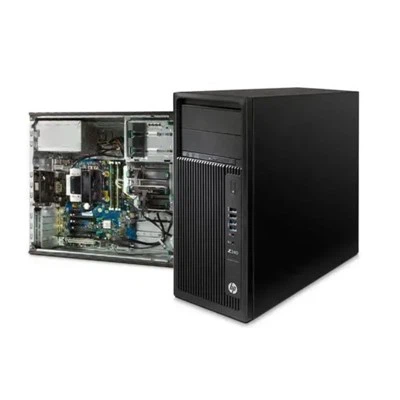


As an HP server supplier, I often encounter the question: "Can I use HP servers for scientific computing?" The short answer is a resounding yes. HP servers offer a robust platform equipped with features and capabilities that are well - suited for the complex demands of scientific research and computational tasks.


The Requirements of Scientific Computing
Scientific computing is a field that involves the use of advanced computational techniques to solve scientific problems. These problems range from simulating the behavior of subatomic particles in particle physics to predicting climate change in environmental science. The requirements for scientific computing are stringent. High - performance computing (HPC) systems need to have a large amount of processing power, significant memory capacity, high - speed data transfer capabilities, and reliable storage solutions.
HP Servers: A Robust Solution for Scientific Computing
HP has a long - standing reputation for producing high - quality servers that can meet the diverse needs of scientific computing. Let's take a closer look at some of the key features of HP servers that make them suitable for this field.
Processing Power
Modern HP servers are equipped with powerful processors. For example, many HP servers support Intel Xeon processors, which offer multiple cores and high clock speeds. These processors can handle parallel computing tasks efficiently, which is crucial for scientific simulations. Parallel computing allows a scientific problem to be divided into smaller sub - problems that can be solved simultaneously, significantly reducing the overall computation time.
Memory Capacity
Scientific computing often involves working with large datasets. HP servers can be configured with a large amount of random - access memory (RAM). This allows researchers to load and process large data arrays in memory, eliminating the need for frequent data swapping between the memory and storage, thus speeding up the computational process.
Storage Solutions
HP offers a variety of storage options for its servers. From high - speed solid - state drives (SSDs) to large - capacity hard disk drives (HDDs), researchers can choose the storage configuration that best suits their needs. For applications that require fast data access, such as real - time data processing in genomics research, SSDs are an ideal choice. On the other hand, for long - term data storage of large - scale scientific datasets, HDDs provide a cost - effective solution.
Networking and Data Transfer
In scientific computing, data needs to be transferred quickly between different components of the system, such as between nodes in a cluster. HP servers support high - speed networking technologies, such as 10 Gigabit Ethernet and Infiniband. These technologies ensure that data can be transferred rapidly, enabling efficient communication between different computational resources.
Specific HP Server Models for Scientific Computing
HPE Proliant DL380 Gen10 Plus 8sff
The HPE Proliant DL380 Gen10 Plus 8sff is a versatile server that can be a great choice for scientific computing. It offers excellent performance and flexibility. With its support for high - end processors and large amounts of memory, it can handle complex scientific algorithms and large datasets. The 8 - small form - factor (8sff) design allows for a compact yet powerful server configuration, making it suitable for both small - scale research labs and large - scale data centers.
HP Proliant DL580 G10
The HP Proliant DL580 G10 is a high - end server designed for demanding workloads. It features a scalable architecture, which means that it can be easily expanded to meet the growing needs of scientific research projects. This server is equipped with multiple processors and a large number of expansion slots, allowing for the addition of specialized hardware, such as graphics processing units (GPUs) for accelerated computing in fields like deep learning and computational fluid dynamics.
Proliant DL360 Gen10 8sff
The Proliant DL360 Gen10 8sff is a reliable and efficient server for scientific computing. It offers a balance between performance and cost - effectiveness. With its compact design and high - speed networking capabilities, it can be integrated into existing scientific computing environments easily. It is suitable for applications where space is limited, such as in small research facilities or edge computing scenarios in scientific fieldwork.
Case Studies: HP Servers in Scientific Research
There are numerous real - world examples of HP servers being used successfully in scientific computing. In a large - scale astrophysics project, HP servers were used to simulate the formation of galaxies. The high - performance processors and large memory capacity of the servers allowed the researchers to run complex numerical simulations that modeled the gravitational interactions between billions of stars and dark matter particles.
In the field of drug discovery, HP servers have been used to analyze large genomic datasets. By leveraging the parallel computing capabilities of the servers, researchers were able to identify potential drug targets more quickly, accelerating the drug development process.
Support and Management
HP provides comprehensive support and management tools for its servers. The HP OneView management software allows administrators to manage and monitor HP servers easily. It provides a single - pane - of - glass view of the entire server infrastructure, enabling efficient resource allocation and troubleshooting. In addition, HP offers 24/7 technical support, ensuring that any issues that arise during scientific computing projects can be resolved promptly.
Conclusion and Call to Action
In conclusion, HP servers are an excellent choice for scientific computing. Their powerful processing capabilities, large memory and storage options, high - speed networking, and comprehensive support make them well - equipped to handle the complex demands of scientific research. Whether you are a small research lab or a large - scale scientific institution, HP servers can provide the computational power and reliability you need.
If you are interested in exploring how HP servers can meet your scientific computing needs, I invite you to contact me for a detailed discussion. We can work together to find the best server solutions and configurations for your specific projects.
References
- Intel Corporation. (2023). Intel Xeon Processors Product Guide.
- Hewlett Packard Enterprise. (2023). HP Server Product Documentation.